Brief History of Juneteenth Legislation and Holiday
Honoring the history, meaning, and enduring importance of Juneteenth.
Our History
Washington, D.C. – Senate Majority Leader Chuck Schumer (D-NY) delivered remarks at a press conference following the Senate's unanimous passage of Juneteenth legislation. He thanked the bipartisan leaders, representatives, volunteers, activists, and caretakers of the nation’s history whose work helped make the recognition possible.
The Senate came together to unanimously pass the bill declaring Juneteenth a federal holiday. It was an important moment for recognizing the nation’s history—not shrinking from it, sweeping it under the rug, or denying it, but facing it directly.
The legislation gave due recognition to one of the most underappreciated events in the nation’s history: the day Union generals arrived in Galveston and informed enslaved African Americans that the war was over and that they were finally free.
More than two and a half years after the Emancipation Proclamation was issued, Juneteenth deserves a place among the nation’s most important celebrations. It is a day of remembrance as well as a day of celebration, inviting Americans to reflect on the ongoing work to achieve full justice for all.
By making Juneteenth a federal holiday, the nation recognizes the sins of the past, grapples with them, teaches them, and learns from them while working toward a more perfect union. It is a holiday that acknowledges the terrible legacy of slavery and the noble truth that none of us are free until we are all free.
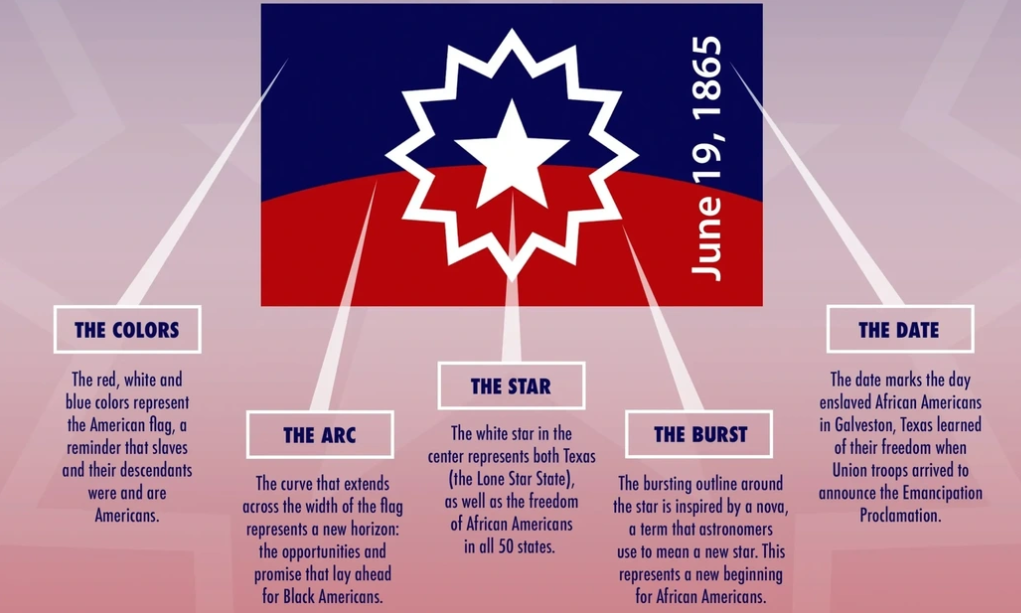
Why We Celebrate Juneteenth
In American Standard English, “Juneteenth” is a contraction of June and nineteenth. Juneteenth is the oldest known commemoration of the ending of slavery in the nation.
Juneteenth is an annual observance celebrating the date Union soldiers enforced the Emancipation Proclamation, freeing all remaining enslaved people in Galveston, Texas, on June 19, 1865. Texas was one of the last states in rebellion following the end of the Civil War to allow enslavement.
Although rumors of freedom were widespread beforehand, emancipation was not announced in the last few states practicing enslavement until General Gordon Granger arrived in Galveston, Texas, and issued General Order No. 3 on the nineteenth of June—almost two and a half years after President Abraham Lincoln signed the Emancipation Proclamation.
Juneteenth is also known as Freedom Day, Jubilee Day, Liberation Day, and Emancipation Day. It is a national holiday celebrating the emancipation of those who had been enslaved in the United States and beyond.